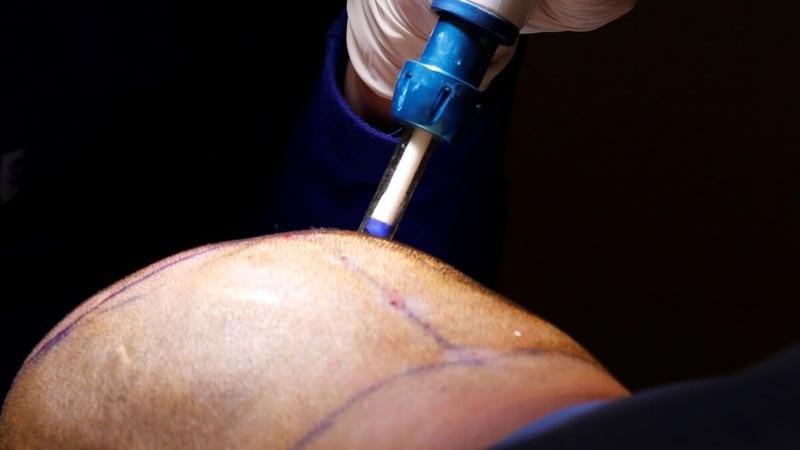
What is Needle-Free Hair Transplant?
Needle-free hair transplant is the application of local anesthesia during hair transplant through pressurized special devices instead of the classic needle method. The aim is to reduce discomfort felt during the anesthesia stage and increase patient comfort. The stages of hair follicle extraction and placement are generally performed with FUE or DHI techniques. Suitability is determined by expert evaluation according to the person's health status and operation plan.
What Does Needle-Free Hair Transplant Do?
Needle-free hair transplant is a comfort approach developed especially for people who are hesitant about the anesthesia stage or have needle phobia.
This method:
- Aims to reduce the penetration sensation during anesthesia application.
- May help reduce pre-operative anxiety.
- May make the operation experience more comfortable.
However, a completely painless experience cannot be guaranteed; personal pain threshold and psychological factors may affect the process.
Differences Between Classic and Needle-Free Anesthesia
Classic local anesthesia:
- Applied with a fine-tip needle.
- Slight burning or stinging sensation may occur at the initial penetration moment.
Needle-free anesthesia:
- Delivered under the tissue with a high-pressure special device.
- Stinging sensation may be eliminated as no needle is used.
- Application can be done in a more controlled and gradual manner.
In both methods, the aim is to minimize pain sensation during the operation.
Key Features of Needle-Free Hair Transplant Method
Pressurized Anesthesia Systems
In needle-free systems, the anesthetic solution is delivered under the skin with micro pressure. This pressure allows the fluid to spread between tissues.
The advantage is the absence of discomfort due to needle entry. However, correct dose and pressure adjustment of the device requires expertise.
Patient Comfort
The anesthesia application is usually the most feared stage in hair transplant. The needle-free system aims to make this stage more tolerable.
However, operation duration, graft count and the person's stress level are also factors affecting overall comfort.
Application Process
After needle-free anesthesia is applied, hair follicle collection and placement are done according to classic FUE or DHI protocols.
So the "needle-free hair transplant" expression essentially describes the anesthesia technique; the root collection and planting stages do not change.
Who Is Needle-Free Hair Transplant Preferred For?
- People with needle phobia
- Patients with high anxiety levels
- Those wanting a more comfortable operation experience
- Those who had difficulty with classic anesthesia experience before
However, combined application with classic anesthesia may be required in some cases. The final decision is made by clinical evaluation.
Those with Anxiety and Needle Fear
Needle fear (trypanophobia) can cause many people to avoid surgical procedures. The needle-free anesthesia system may help reduce this psychological barrier. However, additional supportive approaches may be planned in cases of serious anxiety.
Benefits of Needle-Free Hair Transplant
- Less stinging sensation during anesthesia stage
- Psychological comfort increase
- Reduction of pre-operative stress
- More positive perception of operation experience
However, results and experience may vary from person to person.
Needle-Free Hair Transplant Process and Follow-up
Recovery process depends on the hair transplant technique used (FUE, DHI, etc.); the anesthesia method does not significantly change the recovery period.
General process:
- Crusting may occur in the first 7–10 days.
- Temporary shock shedding may occur.
- New hair growth usually begins within 3–4 months.
- Final result shapes up within 12 months.
Compliance with post-operative care instructions is important for the result.

Short Summary
- Needle-free hair transplant is the application of anesthesia with a pressurized system.
- The aim is to increase procedure comfort.
- The hair follicle planting stage is done with classic techniques.
- Recovery process does not change.
- Suitability requires expert evaluation.