What is No-Shave Hair Transplant?
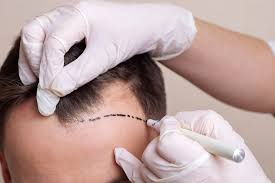
No-shave hair transplant is a modern hair transplant method where the donor area and planting area are not fully shaved, usually performed with the Long Hair FUE technique. It is especially preferred by female patients and those who do not want to interrupt their social life. The aim is to achieve a natural appearance while preserving existing hair length. However, not every patient may be suitable for this method; donor area capacity and hair structure must be analyzed by expert evaluation.
What Does No-Shave Hair Transplant Do?
No-shave hair transplant is an approach developed for people who want to increase hair density without shortening or fully shaving their hair.
With this method:
- Existing hair length is preserved.
- Post-transplant appearance can be more easily camouflaged.
- Return to social life may be psychologically more comfortable.
Results vary from person to person and the final appearance develops gradually over several months.
Differences Between Shaved and No-Shave Hair Transplant
In shaved methods, both the donor area and the planting area are usually shortened. This may facilitate operational control.
In the no-shave method:
- Hair length is preserved.
- The operation requires more precise planning.
- Graft count may be limited in some cases.
Which method is suitable is determined by hair loss level, graft need, and the person's expectations.
Key Features of No-Shave Hair Transplant Method
Long Hair FUE Technique
Long Hair FUE is based on classic FUE principles but is applied without cutting the hair. Follicles are extracted one by one from the donor area and placed among existing hair.
This technique is especially preferred in regional thinning. However, it may not always be the ideal option in advanced baldness with high graft requirements.
Preservation of Existing Hair
One of the most critical points in no-shave transplant is that existing hair is not damaged. Therefore, angle and direction planning is of great importance.
Experience and careful application help preserve existing hair; however, it cannot be said that the risk is completely zero.
Aesthetic Benefits
Thanks to not cutting the hair:
- Post-operative appearance may remain more natural.
- Environmental notice rate may decrease.
- Psychological comfort may increase especially in female patients.
These benefits may vary depending on personal expectations.
Recovery Process
The process after no-shave hair transplant is generally similar to FUE:
- Mild redness and crusting may occur in the first days.
- Crusts decrease within 7–10 days.
- Shock shedding may occur.
- New hair growth usually begins within 3–4 months.
Recovery time may vary depending on individual factors.
Most Preferred No-Shave Hair Transplant Applications
No-Shave Hair Transplant for Women
In women, widespread thinning is usually seen rather than complete baldness, and full shaving is not aesthetically preferred. Therefore, the no-shave technique is frequently evaluated in suitable candidates. However, female pattern hair loss may be due to hormonal or systemic causes. Medical evaluation is important in such cases.
Applications That Don't Affect Social Life
The no-shave method can provide advantage for people who work in front of the camera, have intense work pace, or high aesthetic concerns. Post-operative appearance can be more easily camouflaged; however, it cannot be claimed to be completely scar-free or unnoticeable.
Regional Thickening
No-shave FUE can be an effective option especially in local thinning in the crown area or behind the front line. Controlled planting is done among existing hair.
What to Consider When Choosing No-Shave Hair Transplant?
- Donor area density
- Hair length (generally a certain minimum length is required)
- Hair loss level
- Expected graft count
- Realistic expectations
Hair Length and Donor Area
Hair needs to be at a certain length so that camouflage can be achieved during the procedure. In addition, it is important for the donor area to be homogeneous and have sufficient density. Different planning may be required with insufficient donor capacity.
Benefits of No-Shave Hair Transplant
- Preserving hair length
- Quick adaptation to social life
- Psychological comfort
- Natural appearance advantage
- Suitability for regional thickening
However, these benefits may not occur to the same degree in every case.
When Is No-Shave Hair Transplant Suitable?
Generally for:
- Mild and moderate thinning
- Female patients
- Individuals with social appearance sensitivity
- People seeking regional density increase
it can be evaluated.
In advanced baldness or very high graft need, classic shaved method may be more suitable. The final decision should be made by expert evaluation.
Planning and Follow-up in No-Shave Hair Transplant Process
Pre-operative analysis and post-operative follow-up are critical for a successful result.
Pre and Post-Operative Process
Before surgery:
- Hair analysis
- Donor area examination
- Medical history evaluation
After surgery:
- First wash planning
- Care instructions
- Controlled follow-up
Full hair growth process can continue up to 12 months and varies from person to person.
Future of No-Shave Hair Transplant
Developing micro motor technologies and precise planning methods are making no-shave hair transplant more controlled.
Long Hair FUE can be planned in combination with DHI or supportive medical applications. However, the same technique may not be suitable for every patient.

Short Summary
- No-shave hair transplant is an FUE application performed without cutting the hair.
- Especially suitable for women and people with social appearance sensitivity.
- Preferred in regional thickening.
- Recovery process is similar to classic FUE.
- Suitability requires expert evaluation.