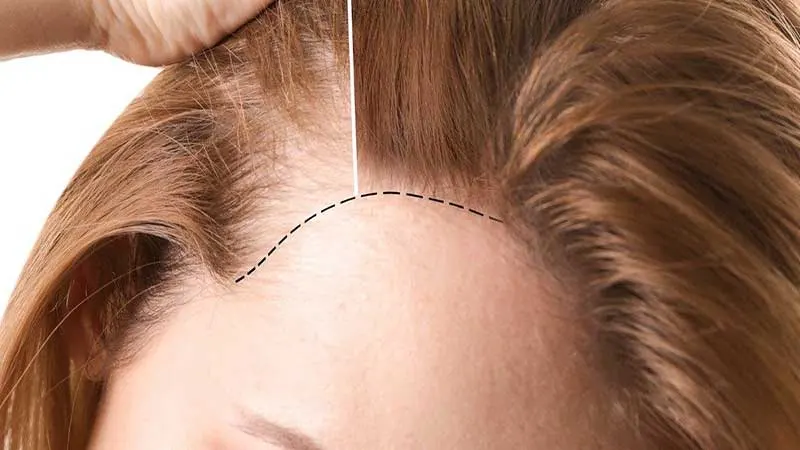
What is Hair Transplant for Women?
Hair transplant for women is a surgical procedure aimed at treating hair thinning or regional baldness caused by genetic, hormonal or traumatic reasons with healthy hair follicle transplantation. Unlike men, women usually experience widespread thinning rather than complete baldness. Therefore, planning is done more sensitively. Suitability is determined by hair loss type, donor area adequacy, and medical evaluation results.
What Does Hair Transplant for Women Do?
Hair transplant for women aims to increase hair density, adjust the hairline, and provide a more balanced aesthetic appearance.
Most common application areas:
- Crown area thinning
- Forehead line recession
- Eyebrow or local traumatic losses
However, female pattern hair loss may often be due to hormonal or systemic causes. Therefore, correct analysis of the underlying cause before hair transplant is important.
Differences Between Women and Men Hair Transplant
- Women usually experience widespread thinning, while pronounced baldness is more common in men.
- No-shave technique is mostly preferred in female patients.
- Preserving existing hair is a more critical issue in women.
- Hairline design is planned with softer and more natural transitions in women.
- Donor area capacity is the determining factor in both genders.
Key Features of Hair Transplant Methods for Women
No-Shave Hair Transplant
One of the most frequently preferred methods in female patients. Application without fully shaving the hair provides social and psychological comfort.
Careful placement is done among existing hair. However, it may not always be suitable in cases with high graft requirements.
DHI Hair Transplant
DHI technique can be preferred to provide controlled density especially in areas requiring thickening. Grafts are placed directly with the help of an implanter pen.
This method may help preserve existing hair; however, suitability requires individual analysis.
Regional Thickening
In women, the aim is often not to create a completely new hairline but to increase existing density. Therefore, regional planning is done and natural distribution is targeted.
Natural Hairline Planning
In women, the front hairline is more rounded and softly contoured. When planning, facial proportions, age and existing hair structure are taken into account. Overly aggressive lines may not look natural.
Most Preferred Hair Transplant Applications for Women
Crown Area Thinning
One of the most common areas in female pattern hair loss. Thickening can be planned if donor capacity is sufficient.
Forehead Line Adjustment
Naturally high forehead structure or receding hairline over time can be aesthetically disturbing. Millimetric planning is important in this area.
Traumatic Hair Loss
Hair transplant can be evaluated in local hair loss due to burns, scars or surgical intervention. However, scar tissue structure may affect success rate.
What to Consider When Choosing Hair Transplant for Women?
- Cause of hair loss
- Donor area density
- Hair thickness
- Expected graft count
- Realistic expectations
Hormonal and Genetic Factors
Hair loss in women may be related to thyroid disorders, iron deficiency, postpartum changes or genetic predisposition. Therefore, blood values and hormonal status should be evaluated before hair transplant, and medical treatment should be planned if necessary.
Benefits of Hair Transplant for Women
- Density increase
- Aesthetic hairline adjustment
- Covering local baldness
- Psychological confidence increase
However, results vary from person to person and the process requires patience.
When Is Hair Transplant for Women Suitable?
Generally for:
- Stabilized hair loss
- Sufficient donor area
- Regional thinning
- Traumatic local losses
it can be evaluated.
If active and widespread hair loss continues, medical treatment may be planned first. The final decision should be made by expert examination.
Hair Transplant Process and Follow-up for Women
Hair transplant is not limited to the day of surgery. Pre-analysis and post-operative follow-up directly affect the result.
Post-Operative Care
- First wash is done per clinic recommendation.
- Crusting may occur in the first 7–10 days.
- Shock shedding may occur.
- New hair growth usually begins after 3–4 months.
- Final result may vary up to 12 months.
The process may vary from person to person.

Short Summary
- Hair transplant for women is usually applied for thinning and regional losses.
- No-shave and DHI techniques are frequently preferred.
- Hormonal factors must be evaluated.
- Recovery process varies from person to person.
- Suitability should be determined by expert examination.