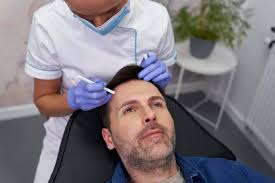
What is FUE Hair Transplant?
FUE hair transplant is a minimally invasive hair restoration method where hair follicles are extracted one by one from the donor area and transplanted to areas experiencing hair loss. It is one of the most preferred techniques today because it does not require stitches, has a low risk of scarring, and allows for natural hairline planning. However, suitability for each patient is determined by expert evaluation based on factors such as hair structure, donor area capacity, and type of hair loss.
What Does FUE Do?
FUE (Follicular Unit Extraction) hair transplant aims to increase hair density and achieve a more natural appearance in people experiencing genetic hair loss, traumatic hair loss, or certain regional thinning.
With this method, genetically hair-loss-resistant follicles from the nape are harvested and placed in bald or sparse areas. When performed with proper planning, natural results are targeted in terms of hairline and density. Final results may vary from person to person and the hair growth process is spread over time.
Differences Between Traditional Methods and FUE
In the FUT (strip method) technique commonly used before FUE, a strip of skin is removed from the donor area and then sutured. In the FUE method, hair follicles are extracted one by one with micro tools.
Key differences:
- FUE does not require stitches.
- Scar visibility is generally lower.
- Recovery may be more comfortable for most patients.
- Offers more flexible planning.
Each method has its advantages and limitations; selection must be made after expert examination.
Key Features of the FUE Method
Graft Collection with Micromotor
In the FUE technique, hair follicles are typically extracted one by one with special tips called micromotor or manual punch. During this process, homogeneous preservation of the donor area is targeted.
Healthy extraction of grafts is critical to the success of the operation. Planning must be done carefully as donor area capacity is limited.
Channel Opening and Graft Placement
Collected follicles are placed into micro channels opened according to predetermined angles and directions.
At this stage:
- Hair growth direction
- Natural density distribution
- Front hairline design
such factors are decisive aesthetically.
Natural Hairline Planning
One of the most critical stages in hair transplant is hairline design. Personalized planning is made taking into account facial proportions, age, and existing hair structure.
Stitch-Free Technique
One of the most important advantages of the FUE method is that it does not require stitches. Millimetric points may form in the donor area, and these marks are usually not noticeable even with short hair.
Recovery Process and Comfort Advantage
In the first few days after FUE, mild redness and crusting may occur. Typically:
- First wash is done per clinic recommendation.
- Crusts fall off within 7–10 days.
- Shock shedding may occur.
- Permanent hair growth begins within a few months and final appearance shapes up to 12 months.
The process may vary from person to person.
Most Preferred FUE Hair Transplant Applications
FUE for Mild and Moderate Hair Loss
Especially in early-stage male pattern hair loss, FUE can be applied to increase density among existing hair. In such cases, natural transition is targeted.
FUE Planning for Advanced Hair Loss
In advanced Norwood levels, donor area capacity is decisive. Covering the entire area in a single session may not always be possible. Therefore, staged planning may be done.
FUE Approaches for Male and Female Patients
In women, hairline design and preservation of existing hair require more sensitive planning. In men, front line and crown density may be prioritized. Suitability must be evaluated with individual analysis.
What to Consider When Choosing FUE Hair Transplant Method?
- Donor area density
- Hair thickness and structure
- Type of hair loss
- Realistic expectations
Hair Structure and Donor Area Adequacy
Fine and thick hair can create different density effects with the same number of grafts. Alternative planning may be required if donor area is insufficient.
Benefits of FUE Hair Transplant
- Stitch-free application
- Minimal scar risk
- Natural hairline planning
- Quick return to daily life (varies by person)
- Can be combined with other hair transplant techniques
Benefits may vary depending on individual factors.
When Is FUE Hair Transplant Suitable?
FUE is generally preferred for:
- Genetic hair loss
- Trauma-related hair loss
- Regional thinning
However, suitability may be limited in cases of active infection, uncontrolled chronic diseases, or insufficient donor area. Medical evaluation is essential for the final decision.
Planning and Follow-up in FUE Hair Transplant Process
Hair transplant is not limited to the day of surgery. Pre-analysis, planning, and post-operative follow-up are important.
Pre and Post-Operative Follow-up Criteria
- Blood tests and medical evaluation
- Donor area analysis
- Post-operative care instructions
- Controlled washing and follow-up appointments
Recovery process may vary depending on individual factors.
Future of FUE Hair Transplant Method
Technological developments; more precise punch tips, advanced planning software, and supportive treatments are making FUE more comfortable.
FUE can be planned in combination with DHI, needle-free anesthesia, or stem cell-supported applications. However, which method is appropriate must be determined by individual analysis.

Short Summary
- FUE hair transplant is a stitch-free method where follicles are extracted and transplanted one by one.
- Natural hairline planning determines the aesthetic outcome.
- Recovery process may vary from person to person.
- Donor area capacity is the most critical factor.
- Suitability must be determined by expert evaluation.