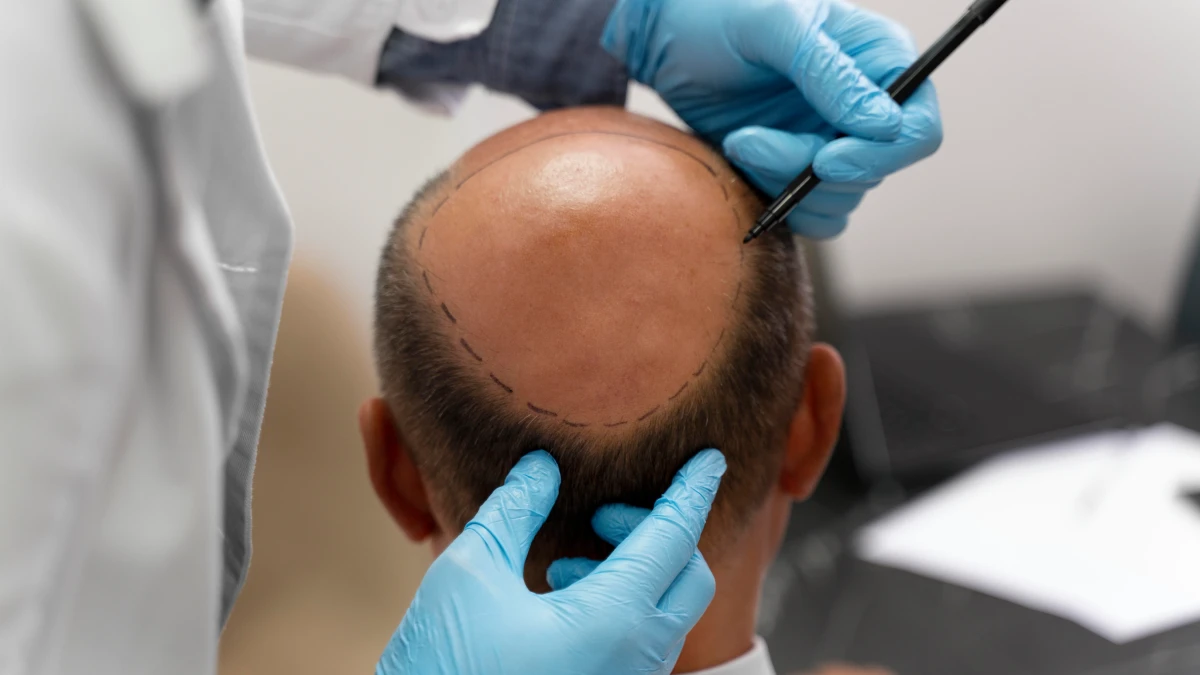
What is DHI Hair Transplant?
DHI hair transplant is a modern hair transplant method where hair follicles are placed directly into the bald or thinning area with a special implanter pen (Choi), combining channel opening and planting in one step. A natural appearance is targeted thanks to density control and precise planning of hair emergence angle. However, suitability for each patient is determined by donor area capacity, hair structure, and medical evaluation results.
What Does DHI Hair Transplant Do?
The DHI method is preferred especially when thickening among existing hair is desired or when more controlled and dense planning is targeted for the front hairline.
With this technique, healthy hair follicles taken from the donor area are placed directly into the planting area through the special pen without waiting. The aim is to provide aesthetic integrity with natural angle, direction, and density control. Results may vary from person to person and the final appearance develops over time.
Differences Between FUE and DHI Hair Transplant
The main difference between DHI and FUE is the method of placing the follicles.
- In FUE, channels are opened first, then grafts are placed.
- In DHI, channel opening and placement are performed simultaneously.
- DHI technique can provide more controlled density especially in thickening cases.
- Both methods do not require stitches.
Which method is suitable is determined by hair loss type, graft need, and expectations.
Key Features of DHI Hair Transplant Method
Choi Implanter Pen Technique
In the DHI method, hair follicles are placed into a special hollow-tip implanter pen. Thanks to this pen, follicles can be placed at the desired angle and depth.
This technique provides precision advantage especially in front hairline and thickening procedures.
Graft Placement Without Channel Opening
The most distinctive feature of DHI is that the classic channel opening stage is not done as a separate procedure. The micro channel is created simultaneously during graft placement.
This may help better preserve existing hair. However, the application plan varies from person to person.
Density and Angle Control
One of the most important factors determining natural appearance in hair transplant is the hair emergence angle. The DHI technique can offer denser and more controlled placement especially in narrow areas.
However, the density achieved depends on donor area capacity and hair thickness.
Recovery Process and Comfort
In the first days after DHI, mild redness and crusting may occur.
General process:
- First wash is done per clinic recommendation.
- Crusting decreases within 7–10 days.
- Shock shedding may occur between 2–8 weeks.
- New hair growth begins after 3–4 months.
Recovery process may vary depending on individual factors.
Most Preferred DHI Hair Transplant Applications
DHI Hair Transplant for Thickening
DHI can provide more controlled placement advantage when planting among existing hair is needed. It is especially preferred in early-stage hair thinning.
Hairline Adjustment
Millimetric planning is important in front hairline design. The DHI method can be used to create denser and more natural transitions. However, hairline design must be done taking facial proportions into account.
DHI Hair Transplant for Women
In women, widespread thinning rather than complete baldness is usually seen. Therefore, preserving existing hair is critically important. DHI can be evaluated in cases suitable for no-shave planning. Suitability requires individual analysis.
What to Consider When Choosing DHI Hair Transplant Method?
- Donor area density
- Hair thickness
- Hair loss level
- Expected graft count
- Realistic expectations
Hair Structure and Graft Need
The same graft count in fine hair may create less density effect compared to thick hair. Therefore, planning should be based on hair character, not just numbers.
Benefits of DHI Hair Transplant
- Channel opening and planting in one step
- Density and angle control
- Better preservation of existing hair
- Suitability for natural hairline planning
- No stitches required
Benefits may vary from person to person and the same result should not be expected in all cases.
When Is DHI Hair Transplant Suitable?
DHI is generally evaluated for people with:
- Regional thinning
- Front hairline recession
- Thickening need
However, different planning may be preferred in advanced baldness cases with high graft requirements. The final decision is made by expert evaluation.
Planning and Follow-up in DHI Hair Transplant Process
The DHI process is not limited to the day of surgery. Pre-analysis and post-operative follow-up are factors that directly affect the result.
Pre and Post-Operative Follow-up
Before surgery:
- Hair analysis
- Donor area evaluation
- Medical history review
After surgery:
- First wash plan
- Care recommendations
- Controlled follow-up appointments
Hair growth process can continue up to 12 months and varies from person to person.
Future of DHI Hair Transplant Method
Advanced implanter pen technologies and supportive treatments are making DHI applications more comfortable and plannable.
DHI can be planned in combination with FUE, stem cell-supported applications, or mesotherapy. However, which method is suitable must be determined by individual evaluation.

Short Summary
- DHI is a method where follicles are placed directly with an implanter pen.
- Density and angle control can provide advantage.
- Often preferred in thickening cases.
- Recovery process may vary from person to person.
- Suitability requires expert evaluation.